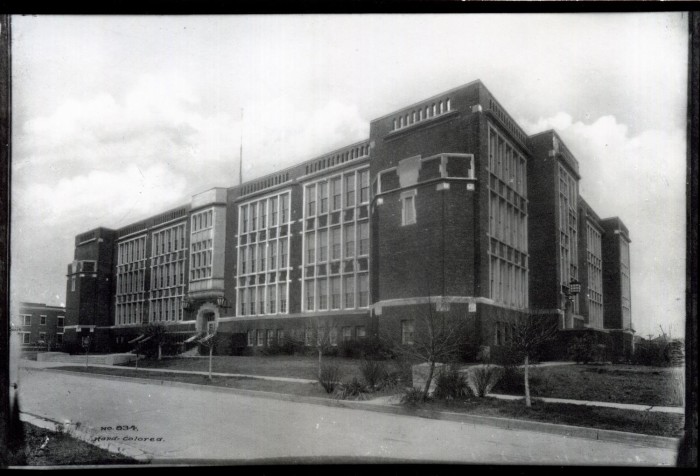
After dinner and the short program, the president of our 1955 high school class scanned the room and announced “open mike.” Fifty years had passed since we all graduated from Central high school in a modest market town in Eastern Oklahoma. I rose from my seat compelled to set a record straight. The ballroom of the lakeside lodge where we held our reunion grew quiet as I walked to the front. In the glow of lounge lighting, candles flickered at twenty tables of eight.
“Does anyone remember Mabel Hickey?”
XX
Her name, Mabel Hickey, seldom passed the lips of my fellow teenaged classmates. We were a tight clique of popular girls in a small one-high-school town (White’s only). She was tall, skinny, sporting a mop of frizzy red hair, bad skin, a receding chin, too-large teeth in a small mouth, high forehead and bulbous nose. Her freckles increased in the hot summers and her face was a mass of pimples. I doubted any of my girl friends at the reunion remembered her well enough to describe her. I assumed Mabel was on no one else’s radar. Her person pulsed in my memory.
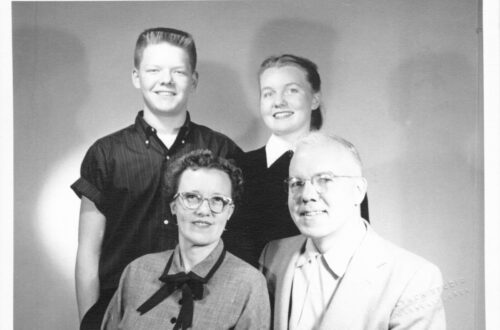
She seemed to have no friends and was not invited to any of our sleep overs or sock-hops. She became a patient of my father’s because of in-grown toenails. He was the local bone and joint doctor, the man for the job. His treatment of her condition caused her to wear orthopedic sandals for sometime, making her the object of derision. She became a dinner table morality lesson for self-foot care. My brothers joined me and our father in ridiculing Mabel. One should not be like her in matters of toenail hygiene. My silence indicated agreement while I suffered her shame somehow, by association? We were both girls. My zits were worse than anyone in my opinion. They’d be laughing at me next, which they already did when it came to dinner table math problems.
I felt terrible for her and wrong about mocking her. Mabel was smart. She excelled at every math and science subject. In our high school chemistry and physics were taught by Ph D’s, men lost somehow to the purgatory of teaching small town teenagers, men who missed the tenure-track university jobs. Only a handful of us would go on to college and higher degrees. They were sour men content with a classroom full of boys. According to my father, girls were not capable of such subject matter. Mabel took all those advanced classes and excelled.
I was determined to be the Valedictorian of our class, the prize for winning the silent war I waged with my father. He ridiculed my ability to think while teaching me large vocabulary words and pushing me to excel. In order to capture a straight A high school success rate, I strategically avoided any class that might be too challenging. I took nothing in science after chemistry and nothing in math after algebra. When the final scores were tallied, I beat Mabel by one half point, carried away the trophy. I made the valedictory speech at graduation. I proved to my father that I was the smartest person in the class.
I knew that wasn’t true. I had calculated my way into first place. I robbed her of her rightful position. I robbed myself of a chance to have a smart girlfriend and learn together without regard for the outcome.
Mabel went on, like me, to attend Ivy League colleges and get masters degrees in our chosen fields: modern romance languages for me; science and math for her. She haunted me. During all those years I wondered what she felt as we went through high school, she the outsider, me the popular in-crowd leader. How could she have born up under such rejection? Was she miserable? Did she care the way I would have? I was ashamed of my advantage, the fact that I was pretty through no fault of my own, that I had popular parents, that I had advantages few of my classmates had. I doubted I could have survived her existence.
Fifty years passed. My husband and I lived in Seattle. During a spring trip to the DC area, we took a walk along the Silver Spring section of the Chesapeake & Ohio canal towpath. My fiftieth reunion was coming up at the end of the summer. As we walked I confessed my remorse about Mabel. “I think she settled around these parts,” I said.
Then a woman approached on the towpath. The same receding chin and crown of now graying red curls, creamy skin and a tall dignified, relaxed stride. “Mabel?” I called out. “Betsy Johnson?” she replied. We hugged and spent a few minutes catching up.
##
Continuing at the mike in front of my fiftieth reunion classmates, I said, “I don’t think she has ever come to a reunion. I want to report to you all that she is alive and well, married with grown children. She lives back east where she’s been teaching science at the community college level. This past spring my husband and I ran into her on a trail near her home just outside of Washington DC. She goes by her middle name, Lee Gough. She is still teaching in her retirement, a program for high school science teachers, training them how to make science accessible to hormonally crazed teenagers.”
A murmur spread through the semi-darkness. I cleared my throat.
“Mabel should have been our valedictorian. She was by far the smartest person in our class.”
The ghost that had haunted me for fifty years dissipated in the awkward laughter that grew to warm applause.